In the gentle hush of evening light, some of the most powerful moments unfold in the simplest of gestures. The photograph “Threads of Love” captures one such moment: a mother and her daughters gathered together, hands moving with practiced care as they weave more than just braids. They weave connection, heritage, and love into every strand.
This image speaks to something universal yet deeply personal: the quiet power that flows through families when they come together in shared ritual and tradition. It reminds us that strength isn’t always loud or dramatic. Sometimes, the most profound strength lives in the gentle touch of a mother’s hands, the patient learning of daughters, and the unspoken understanding that passes between generations.
The Sacred Art of Hair Braiding
Hair braiding transcends simple grooming. Across cultures and throughout history, the act of styling hair has carried deep meaning: from African cornrows that once mapped escape routes for enslaved people, to Native American braids that represent the connection between earth and sky, to the elaborate updos of ancient Greek and Roman women that signified social status and beauty ideals.
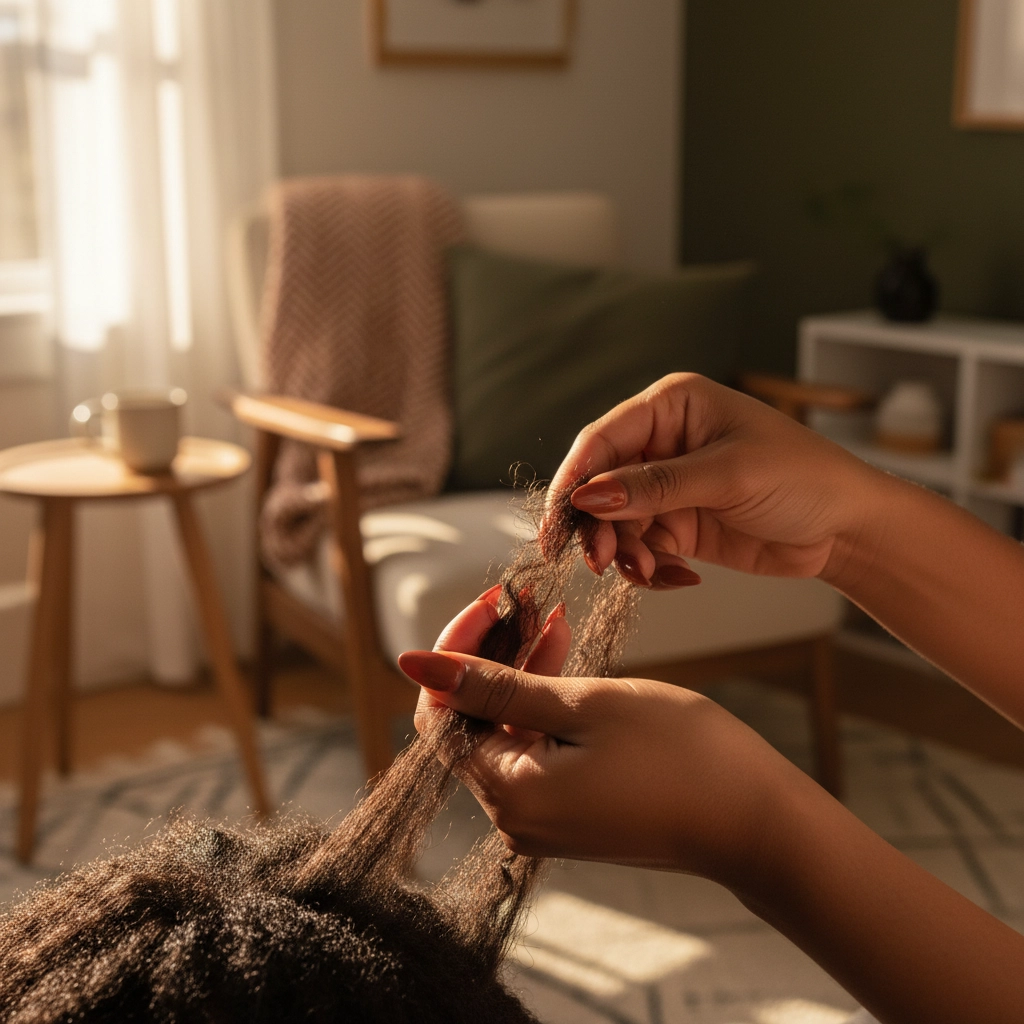
In this captured moment, we witness the continuation of this ancient practice. The mother’s hands move with the confidence that comes from years of experience, while her daughters learn not just the technique, but the rhythm of togetherness. Each section of hair carefully divided, each strand purposefully placed, becomes a meditation on patience, care, and the art of creating beauty together.
The braiding session becomes a sanctuary: a space where the outside world fades and only the present moment matters. In our fast-paced digital age, these pockets of unhurried connection become even more precious. They remind us that some of life’s most important lessons can’t be rushed or learned through screens.
Quiet Strength in Everyday Moments
True strength often whispers rather than shouts. The mother in this photograph embodies this quiet strength: not through grand gestures, but through consistent presence. Her steady hands represent countless evenings spent in similar rituals, countless moments of showing up for her daughters in ways both big and small.
This type of strength builds resilience in the next generation. The daughters learn that they are worthy of time, attention, and care. They internalize the message that their heritage matters, that they belong to something larger than themselves, and that beauty routines can be acts of self-love and cultural pride rather than mere vanity.
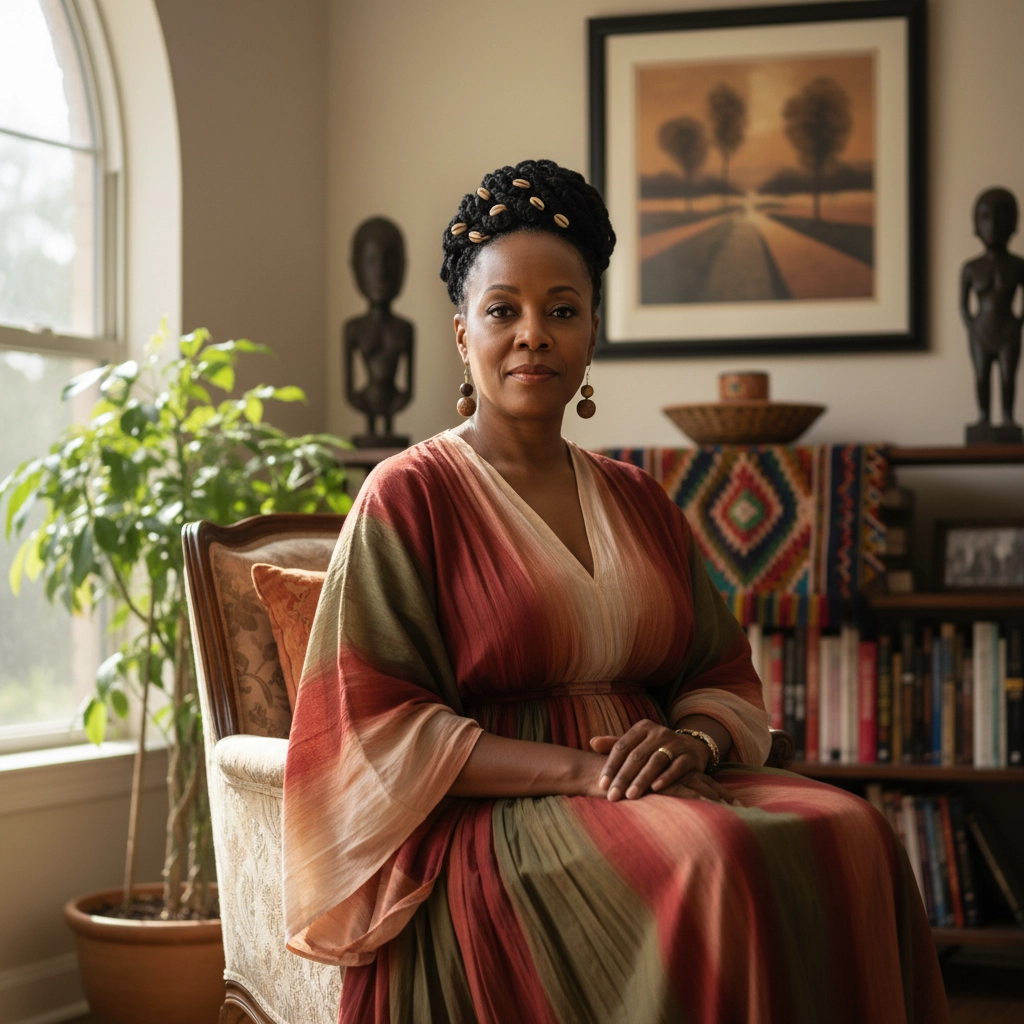
The photograph captures what psychologists call “emotional attunement”: the way family members sync their rhythms, creating a shared emotional space. In the gentle concentration visible in their postures, we see minds and hearts aligned in common purpose. This attunement forms the foundation of secure attachment, helping children develop confidence and emotional intelligence.
Cultural Heritage as Living Tradition
Heritage isn’t something locked away in museums or history books. It lives in the everyday practices passed from one generation to the next. The hairstyles being created in this image likely carry specific cultural significance: patterns and techniques that have been refined over generations, each variation telling a story about identity, creativity, and belonging.
When a mother teaches her daughter to braid, she transmits more than technique. She passes down aesthetic sensibilities, cultural values, and a sense of continuity with ancestors. The daughter learns that she is part of an unbroken chain stretching back through time and forward into the future.
This transmission of culture happens not through formal lessons but through shared experience. The knowledge flows naturally from hand to hand, from generation to generation, embedded in muscle memory and family routine. It’s democracy of learning: no classrooms required, no tests to pass, just the patient repetition of meaningful practice.
The Language of Touch
In our increasingly digital world, physical touch has become a precious commodity. The braiding session captured in this photograph represents a form of communication that predates language: the language of caring touch.
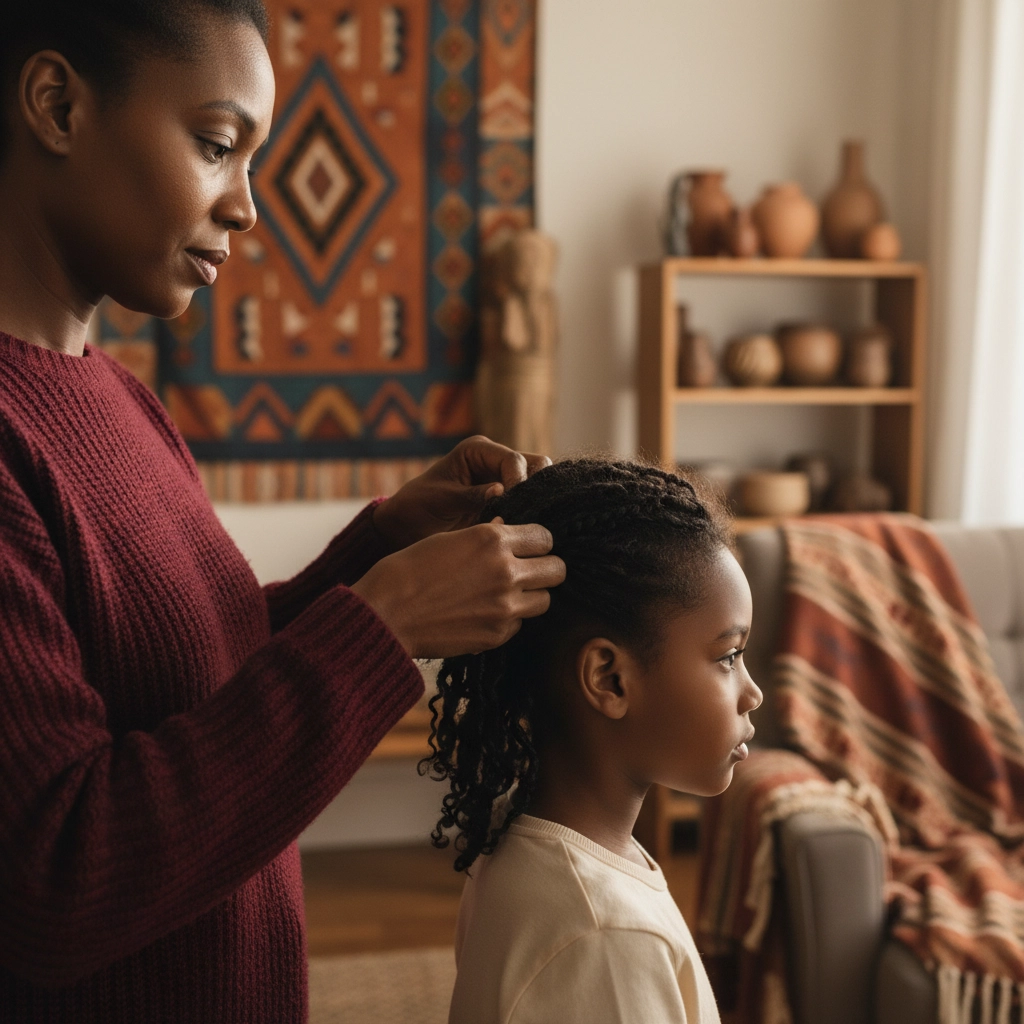
Research shows that appropriate, loving touch releases oxytocin, often called the “bonding hormone.” It reduces stress, promotes feelings of safety, and strengthens emotional connections. For children, regular positive physical contact with caregivers contributes to healthy brain development and emotional regulation.
The mother’s hands in the photograph speak volumes without words. They say: “You are important. You are beautiful. You are worthy of my time and attention. Your hair, your appearance, your cultural identity matter.” These messages, conveyed through gentle touch and focused attention, become part of the daughters’ internal narrative about their own worth.
Building Identity Through Shared Ritual
Family rituals like hair braiding help children develop a strong sense of identity. They provide predictable, special times that belong uniquely to the family unit. These rituals create what researchers call “family identity markers”: shared experiences that define who the family is and what they value.
The daughters in this photograph are learning not just about hair care, but about their place in the family system and the broader cultural community. They’re discovering that they belong to traditions that honor beauty, patience, and intergenerational connection.
As they grow older, they’ll likely carry these experiences with them, perhaps recreating similar moments with their own daughters. The photograph thus captures not just a single evening, but a link in an ongoing chain of cultural transmission.
Photography as Cultural Documentation
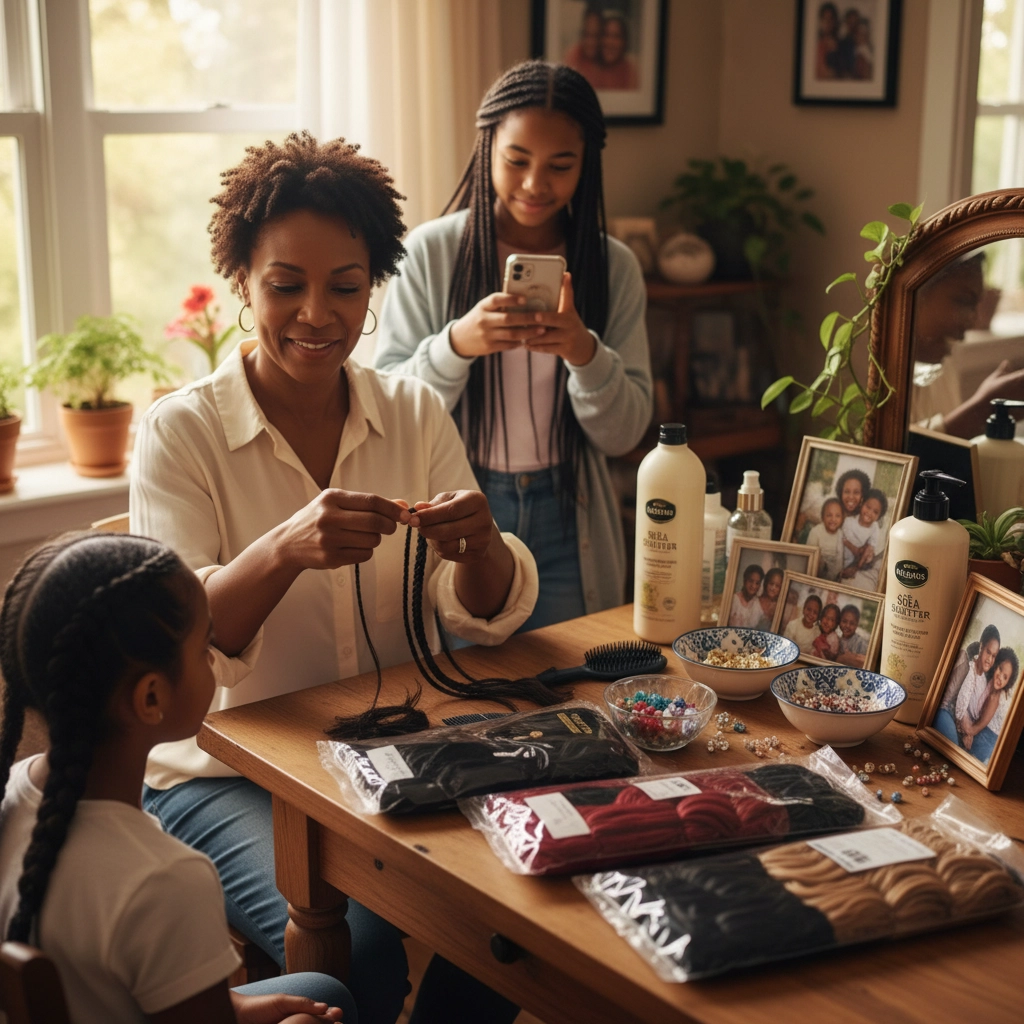
Images like “Threads of Love” serve as powerful cultural documents. They preserve moments that might otherwise be forgotten, creating visual records of traditions that deserve celebration and continuation. In an era when many cultural practices face the threat of disappearing under globalization and modernization, photographs become archives of human connection and cultural richness.
The photographer’s eye captured something beyond a simple family scene. They recognized the deeper significance in what might appear to be an ordinary moment, understanding that the extraordinary often hides in plain sight. This recognition transforms a casual evening ritual into a profound statement about love, heritage, and the power of family bonds.
The Ripple Effect of Captured Moments
When we witness scenes like this: whether in person or through photography: something shifts within us. We’re reminded of our own family traditions, our own moments of connection, our own sources of cultural strength. The image becomes a mirror, reflecting back our shared humanity and our universal need for belonging and love.
For viewers who see themselves reflected in this image, it offers validation and celebration. For those from different cultural backgrounds, it provides a window into the universal themes that connect all families: the desire to nurture, to preserve meaningful traditions, and to create bonds that transcend individual lifetimes.
Preserving What Matters
“Threads of Love” reminds us that some of life’s most important moments happen in the quiet spaces between the day’s more dramatic events. They happen in the evening light, in the patient repetition of caring gestures, in the wordless communication between people who love each other deeply.
These moments deserve our attention, our respect, and our preservation. They remind us that strength comes not from power over others, but from the power to nurture, to connect, and to create beauty together. In a world that often celebrates the loud and the flashy, this photograph honors the quiet and the profound.
The next time you witness such a moment: whether in your own family or in others: pause to appreciate its significance. Recognize the threads of love being woven in real time, creating the fabric that holds families and cultures together across time and space.